What is Secondary Sales and Its Importance for Brands
Secondary sales show how products move from distributors to retailers. For brands, tracking this stage is crucial to understand real demand, improve stock flow, and drive stronger sales performance.
Secondary sales refer to the sale of products from distributors to retailers. It is one of the most critical stages in the distribution cycle because it reflects how products are actually moving in the market, beyond just warehouse dispatches.
In a multi-layered distribution network, simply pushing stock into the market does not guarantee demand. What truly matters is whether that stock is reaching retail shelves consistently and at the right pace. This is where secondary sales play a crucial role. For brands operating in industries like FMCG, pharmaceuticals, and consumer goods, secondary sales provide real visibility into demand, stock movement, and distributor performance.
What is Secondary Sales?
Secondary sales occur when distributors sell the products they have purchased from a brand to retailers such as supermarkets, pharmacies, and local stores. This stage represents the movement of goods from the distribution network into retail outlets, where products become available on shelves for customers to purchase.
Secondary Sales = Distributor → Retailer
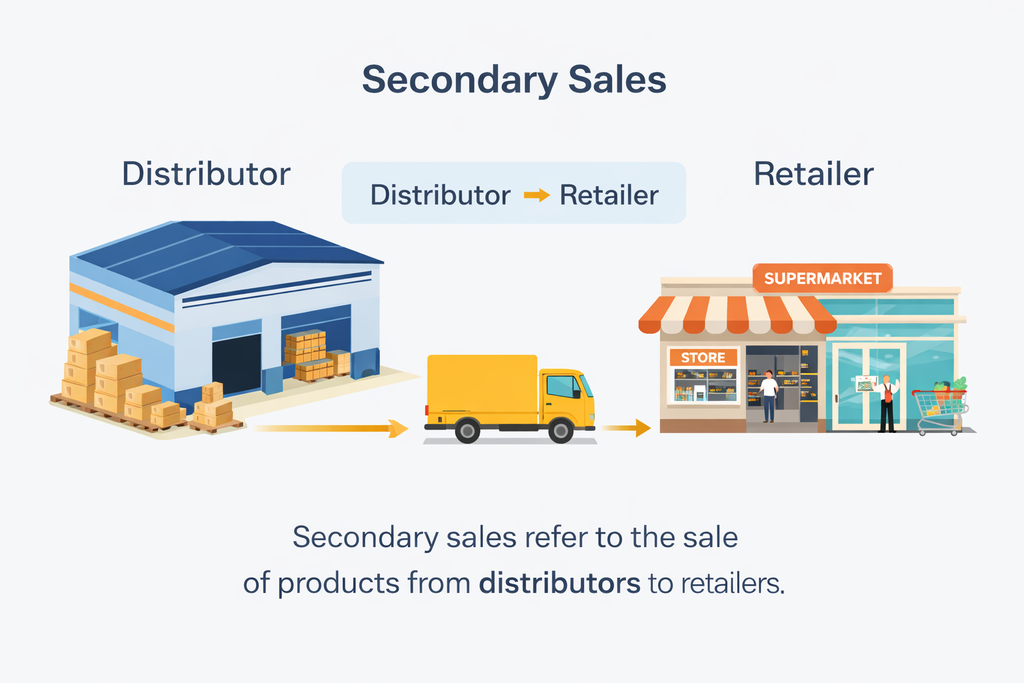
This stage shows whether products are actively moving toward retail shelves or simply sitting in distributor warehouses. For example, if a distributor supplies 4,000 units to retailers in a month, those 4,000 units are recorded as secondary sales. This data gives brands a clearer understanding of market movement.
Why Secondary Sales is Important for Brands
Secondary sales are more than just a transaction between a distributor and a retailer. They act as a strong indicator of market health and distribution efficiency. By tracking how products move from distributors to retail shelves, brands gain real insight into whether their distribution network is functioning effectively.
Unlike dispatch numbers alone, secondary sales reflect actual market activity. They help brands understand demand patterns, identify supply chain gaps, measure distributor performance, and ensure consistent product availability.
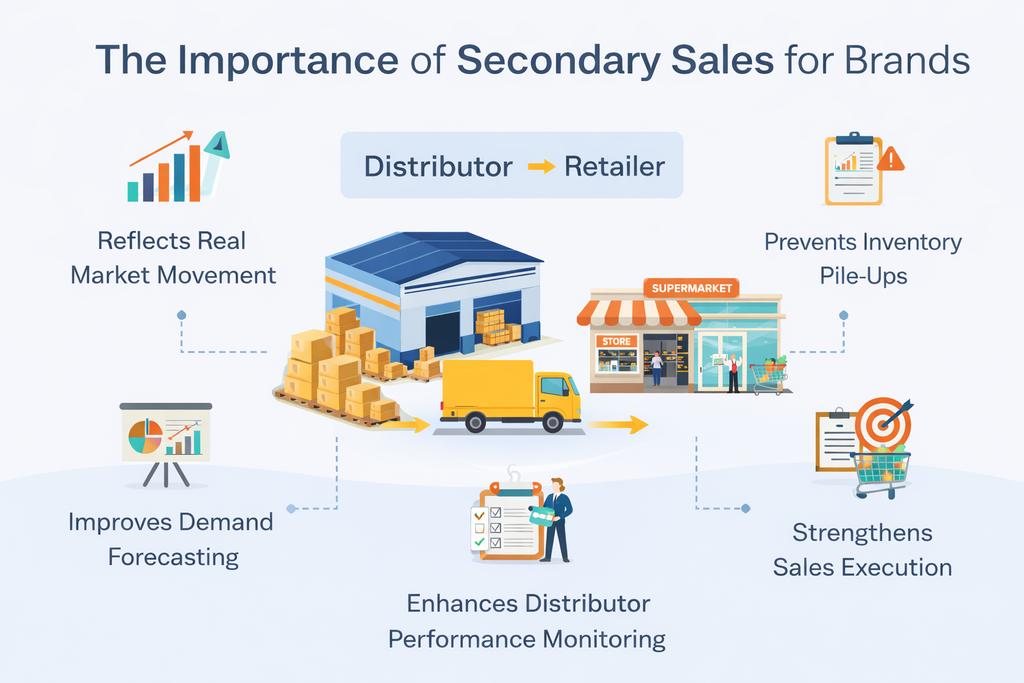
a) Reflects Real Market Movement
Secondary sales show how much stock is actually flowing into retail stores, giving brands a realistic picture of product demand. This helps companies understand whether products are actively selling across different regions and retail formats.
b) Prevents Inventory Pile-Ups
If products are not moving from distributors to retailers, stock can accumulate, leading to blocked working capital and potential expiry risks. By monitoring secondary sales regularly, brands can take timely corrective actions to balance stock levels.
c) Improves Demand Forecasting
Accurate secondary sales data helps brands plan production, inventory, and replenishment more effectively. It enables better alignment between supply and actual market demand, reducing both shortages and excess stock.
d) Enhances Distributor Performance Monitoring
Brands can evaluate which distributors are performing well and which territories need attention. This allows companies to identify gaps in coverage and implement targeted strategies to improve performance.
e) Strengthens Sales Execution
With visibility into retail-level movement, brands can improve market coverage, reduce stock gaps, and ensure better availability on shelves. Stronger sales execution ultimately leads to higher retailer confidence and improved brand presence in the market.
Challenges in Tracking Secondary Sales
Many brands struggle with limited visibility into distributor-to-retailer transactions. Manual reporting, delayed data sharing, and lack of real-time insights can make it difficult to track actual market performance. Without proper secondary sales tracking, brands may:
• Overestimate growth
• Face stock-outs or overstocking
• Miss market opportunities
• Lose control over distribution efficiency
Conclusion
Secondary sales play a crucial role in helping brands understand how their products are performing in the market. They provide clear visibility into stock movement at the retail level and support better planning, forecasting, and distributor management. For brands aiming to improve sales execution and drive sustainable growth, focusing on secondary sales is not optional, it is essential.
Shalini Dondeti
ERP Software Developer
No comments yet. Login to start a new discussion Start a new discussion